Starting with Tax preparation vs. tax filing, this introductory paragraph aims to provide an intriguing overview of the topic, setting the stage for an in-depth discussion.
It is essential to understand the nuances between tax preparation and tax filing to navigate the complexities of tax season effectively.
Tax Planning
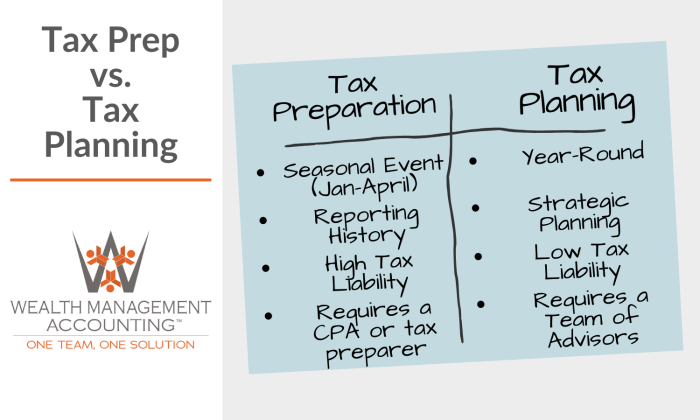
Tax planning is a crucial aspect of financial management that involves analyzing one’s financial situation to ensure the most efficient tax structure. By strategically planning ahead, individuals and businesses can minimize tax liabilities and maximize savings.
Importance of Tax Planning
Effective tax planning allows individuals and businesses to take advantage of tax incentives, deductions, and credits to reduce the amount of taxes owed to the government. It helps in structuring financial decisions in a tax-efficient manner, ultimately leading to increased wealth accumulation and long-term financial stability.
Strategies for Effective Tax Planning
- Utilizing tax-advantaged accounts such as IRAs and 401(k)s to save for retirement and reduce taxable income.
- Timing income and expenses to optimize tax deductions and credits in a given tax year.
- Maximizing tax deductions by keeping track of eligible expenses such as charitable donations, medical expenses, and business expenses.
- Engaging in tax-loss harvesting to offset capital gains with capital losses in investment portfolios.
- Utilizing tax-efficient investment strategies to minimize tax liabilities on investment gains.
Benefits of Tax Planning
Effective tax planning not only helps in minimizing tax liabilities but also allows individuals and businesses to allocate resources more efficiently. By understanding the tax implications of financial decisions, one can make informed choices that lead to significant savings in the long run.
Tax Preparation
Tax preparation is the process of organizing and submitting your financial information to calculate and file your taxes accurately and efficiently. It is a crucial step in the tax process to ensure compliance with tax laws and regulations.
Steps Involved in Tax Preparation
- Gather Financial Documents: Collect all necessary documents such as W-2s, 1099s, receipts, and other income-related paperwork.
- Organize Records: Sort and organize your financial records to make the process smoother.
- Calculate Income and Deductions: Determine your total income and eligible deductions to minimize tax liability.
- Fill Out Tax Forms: Complete the required tax forms accurately, including any schedules or additional documentation.
- Review and Double-Check: Thoroughly review your tax return for accuracy and ensure all information is correct before submission.
- File Taxes: Submit your tax return to the IRS by the deadline, either electronically or through mail.
DIY Tax Preparation vs. Professional Tax Preparation Services
DIY tax preparation involves individuals preparing and filing their taxes independently using software or online platforms. While this option may be cost-effective, it requires time, knowledge, and attention to detail to avoid errors.
On the other hand, professional tax preparation services are offered by tax professionals who are trained and experienced in tax laws. They can provide personalized advice, maximize deductions, and ensure compliance with complex tax regulations. Although this option may come at a higher cost, it offers peace of mind and expertise in handling intricate tax situations.
Tax Optimization

Tax optimization is the process of minimizing tax liability by utilizing various strategies and techniques within the legal framework to maximize tax efficiency. Unlike tax planning, which focuses on preparing and filing taxes, tax optimization aims to strategically reduce tax burdens through proactive measures.
Benefits of Tax Optimization
- Maximizing tax deductions and credits
- Utilizing tax-efficient investment strategies
- Optimizing business structures for tax efficiency
- Reducing taxable income through retirement planning
Examples of Tax Optimization Strategies
- Charitable donations to qualify for tax deductions
- Investing in tax-advantaged accounts such as IRAs and 401(k)s
- Utilizing tax-loss harvesting to offset capital gains
- Structuring business expenses to maximize deductions
Differences between Tax Optimization, Tax Planning, and Tax Preparation
Tax optimization goes beyond tax planning and preparation by actively seeking ways to minimize tax liabilities through proactive strategies and planning. While tax planning focuses on preparing for tax filing and compliance, tax optimization aims to strategically reduce tax burdens through various legal means to maximize tax efficiency.
Tax Returns
Tax returns are official documents that individuals, businesses, and other entities must file with the government to report their income, expenses, and other financial information. They are important because they determine the amount of tax that a taxpayer owes or is owed by the government.
Information Required for Filing Tax Returns
- Personal Information: This includes your full name, Social Security number, address, and filing status.
- Income Information: Details about your income sources such as wages, investments, and retirement accounts.
- Expense Information: Deductions for expenses like mortgage interest, medical expenses, and charitable contributions.
- Tax Credits: Information on any eligible tax credits that can reduce your tax liability.
- Previous Tax Returns: Some information from prior tax returns may be needed for comparison or reference.
Common Mistakes to Avoid
- Math Errors: Double-check all calculations to avoid errors that could result in penalties or delays.
- Filing Status Errors: Choose the correct filing status based on your situation to ensure accurate tax treatment.
- Missing Income: Report all sources of income to avoid underreporting and potential audits.
- Forgetting Deductions: Be sure to claim all eligible deductions to lower your taxable income.
- Missing Deadlines: Failing to file on time can result in penalties and interest charges.
In conclusion, grasping the differences and importance of tax preparation and tax filing is key to managing your finances efficiently and ensuring compliance with tax laws.
FAQ Explained
What is the main difference between tax preparation and tax filing?
Tax preparation involves organizing your financial information and calculating your tax liability, while tax filing is the actual submission of your tax return to the IRS.
Is it better to opt for DIY tax preparation or professional services?
The choice between DIY tax preparation and professional services depends on your comfort level with tax laws and the complexity of your finances. Professional services offer expertise but come at a cost.
How does tax optimization differ from tax planning and tax preparation?
Tax optimization focuses on strategic ways to minimize tax liabilities and maximize savings, going beyond the basic planning and preparation stages.
What are some common mistakes to avoid when filing tax returns?
Avoid errors in entering personal information, miscalculating deductions, missing deadlines, and failing to sign the return to prevent delays and penalties.