Embark on a journey into the world of tax optimization for small businesses, where smart strategies can lead to significant benefits. Discover how careful planning and preparation can make a difference in your financial success.
Tax Planning for Small Businesses
Effective tax planning is crucial for small businesses to optimize their tax liabilities and maximize their profits. By strategically managing their finances and tax obligations, small businesses can ensure compliance with tax laws while minimizing the amount of taxes they owe.
Importance of Tax Planning
Tax planning allows small businesses to take advantage of various deductions, credits, and incentives offered by the tax code. By carefully analyzing their financial situation and planning ahead, businesses can reduce their tax burden and keep more of their hard-earned money.
Strategies for Effective Tax Planning
- Keep detailed records: Maintaining accurate financial records throughout the year can help small businesses identify tax-saving opportunities and ensure compliance with tax laws.
- Consult with a tax professional: Working with a tax professional can help small businesses navigate complex tax laws, maximize deductions, and minimize tax liabilities.
- Consider tax-efficient business structures: Choosing the right business structure, such as an LLC or S Corporation, can help small businesses reduce their tax obligations and protect their assets.
Benefits of Tax Planning
Tax planning can help small businesses optimize their tax liabilities by strategically managing their finances, taking advantage of tax incentives, and maximizing deductions. By implementing effective tax planning strategies, small businesses can improve their bottom line and achieve long-term financial success.
Tax Preparation Process

When it comes to tax preparation for small businesses, there are several important steps that need to be followed to ensure compliance with tax laws and regulations.Accurate record-keeping is crucial during the tax preparation process as it helps in providing evidence of income, expenses, and deductions claimed by the business. Maintaining organized records can also help in identifying potential tax-saving opportunities and minimizing the risk of errors or audits.
Significance of Accurate Record-keeping
- Keep track of all income and expenses: Maintaining detailed records of all financial transactions can help in accurately reporting income and claiming deductions.
- Document deductions and credits: Proper documentation of deductions and credits can help in reducing taxable income and maximizing tax savings.
- Review and reconcile financial statements: Regularly reviewing and reconciling financial statements can help in identifying discrepancies and ensuring accuracy in tax reporting.
- Utilize accounting software: Using accounting software can streamline record-keeping processes and make it easier to track financial data for tax purposes.
Benefits of Early Tax Preparation
- Avoid last-minute rush: Early tax preparation allows small businesses to avoid the stress and errors that often come with last-minute filing.
- Maximize deductions: By starting tax preparation early, businesses have more time to review financial records and identify potential deductions that can help reduce taxable income.
- Plan for tax payments: Early tax preparation gives businesses a better understanding of their tax liabilities and allows them to plan for any tax payments well in advance.
- Ensure compliance: Starting tax preparation early ensures that businesses have ample time to gather necessary documentation and information to comply with tax laws and regulations.
Tax Optimization Strategies
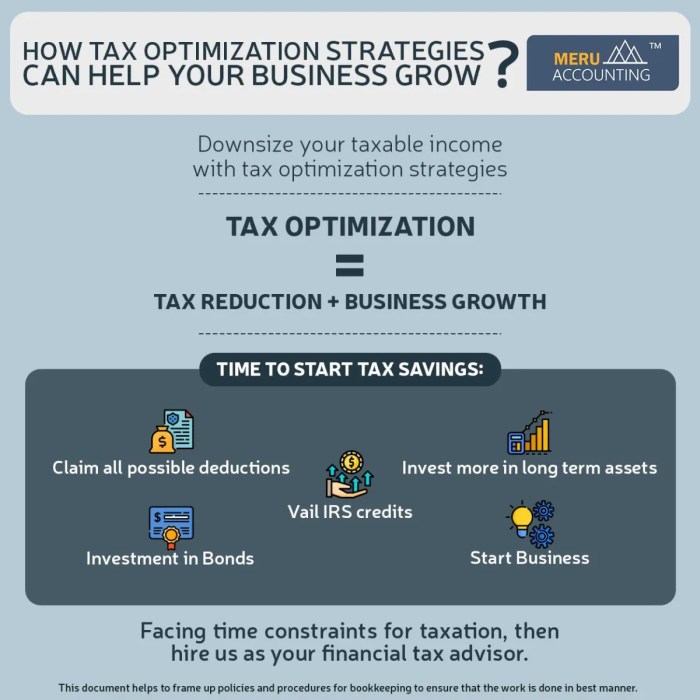
When it comes to optimizing taxes for small businesses, there are various strategies that can be implemented to minimize tax liabilities and maximize savings. By taking advantage of tax deductions, credits, and other planning techniques, small businesses can effectively manage their tax obligations.
Utilizing Tax Deductions and Credits
One key strategy for tax optimization is to identify and utilize all available tax deductions and credits. This can include deductions for business expenses such as office supplies, rent, utilities, and employee salaries. Additionally, small businesses may be eligible for tax credits such as the Small Business Health Care Tax Credit or the Research and Development Tax Credit.
- Keep detailed records of all business expenses to ensure you are claiming all eligible deductions.
- Explore tax credits specific to small businesses to see if you qualify for any additional savings.
Seeking Professional Tax Assistance
Another important strategy for tax optimization is to seek the help of tax professionals. Tax advisors and accountants with expertise in small business tax planning can provide valuable guidance on maximizing deductions, credits, and overall tax savings. They can also help with tax planning strategies to reduce liabilities and ensure compliance with tax laws.
Working with a tax professional can help small businesses navigate complex tax regulations and take advantage of available tax-saving opportunities.
Filing Tax Returns
When it comes to filing tax returns for small businesses, it is essential to follow a structured process to ensure accuracy and compliance with the tax laws. Proper tax return filing is crucial for maintaining the financial health of the business and avoiding any penalties or legal issues.
Common Mistakes to Avoid During Tax Return Filing
- Failure to keep accurate records: Keeping detailed and organized financial records is essential for accurate tax return filing. Without proper documentation, it is easy to make mistakes or overlook deductions.
- Missing deadlines: Missing tax filing deadlines can result in penalties and interest charges. It is important to be aware of the due dates and submit the tax returns on time.
- Not seeking professional help: Tax laws can be complex, especially for small businesses. Not seeking professional help from a tax advisor or accountant can lead to errors in tax return filing.
- Incorrect classification of expenses: Misclassifying expenses can result in incorrect deduction claims, leading to potential audits or penalties.
Consequences of Incorrect Tax Return Filing for Small Businesses
- Penalties and fines: Incorrect tax return filing can result in penalties and fines imposed by the tax authorities. These financial consequences can significantly impact the business’s bottom line.
- Audit risk: Incorrect tax return filing increases the risk of being audited by the tax authorities. An audit can be time-consuming, costly, and stressful for small businesses.
- Legal implications: In severe cases of tax evasion or fraud, incorrect tax return filing can lead to legal implications, including lawsuits and criminal charges against the business owners.
In conclusion, mastering the art of tax optimization can pave the way for a more prosperous future for your small business. By implementing the right strategies and seeking professional advice when needed, you can navigate the complex tax landscape with confidence.
FAQ Explained
How often should I review my tax optimization strategies?
It’s recommended to review your tax optimization strategies at least once a year or whenever there are significant changes in your business.
Can tax optimization strategies vary based on the type of small business?
Yes, tax optimization strategies can be tailored to suit the specific needs and structure of different types of small businesses.
Is hiring a tax professional necessary for small businesses to optimize their taxes?
While not mandatory, consulting a tax professional can provide valuable insights and guidance to maximize tax savings.
How far in advance should I start tax preparation for my small business?
It’s advisable to start tax preparation as early as possible to avoid any last-minute rush and ensure accuracy in filing.